We did it Joe

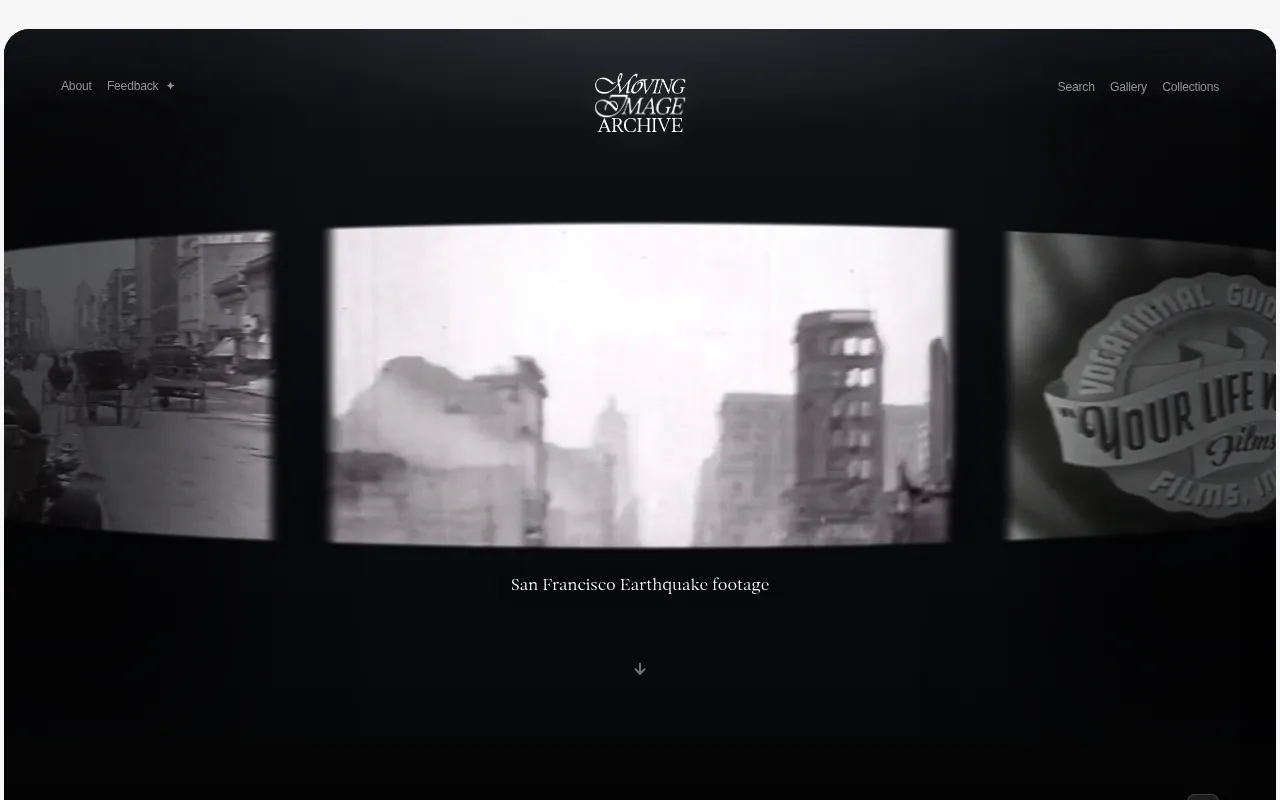
Moving Image Archive
A searchable grid of film fragments turns Moving Image Archive into a browsing cabinet of shots, with visible dates spanning 1915–2008 and clips lasting anywhere from 2 to 57 seconds. A “Describe a shot” search prompt invites queries like “computer workers,” while year-and-duration labels keep the interface spare. Built by Cova and designed by Jean, it puts decades side by side with little ceremony. The appeal is history at the scale of a shot: a few seconds become the thing worth finding, rather than a passage to skip through.
https://www.movingimagearchive.com/
Florilegium — procedurally generated Delft-blue page margins
LuaLaTeX grows Delft-blue botanical margins with florilegium, computing every petal, leaf and stem as watercolor-like curves written directly into the PDF. Each document gets eight species sampled from 15 body plans with 62 traits, while a greedy space-filling loop fits four species per page into whatever room the text leaves. Bees, hummingbirds and other visitors follow their plants; optional aging takes the garden from buds to seed heads, and vines weave through decorated initials. It gives procedural ornament a surprisingly botanical discipline: even a randomly generated pea flower has to produce a pod.

https://github.com/kevinraymond/florilegium
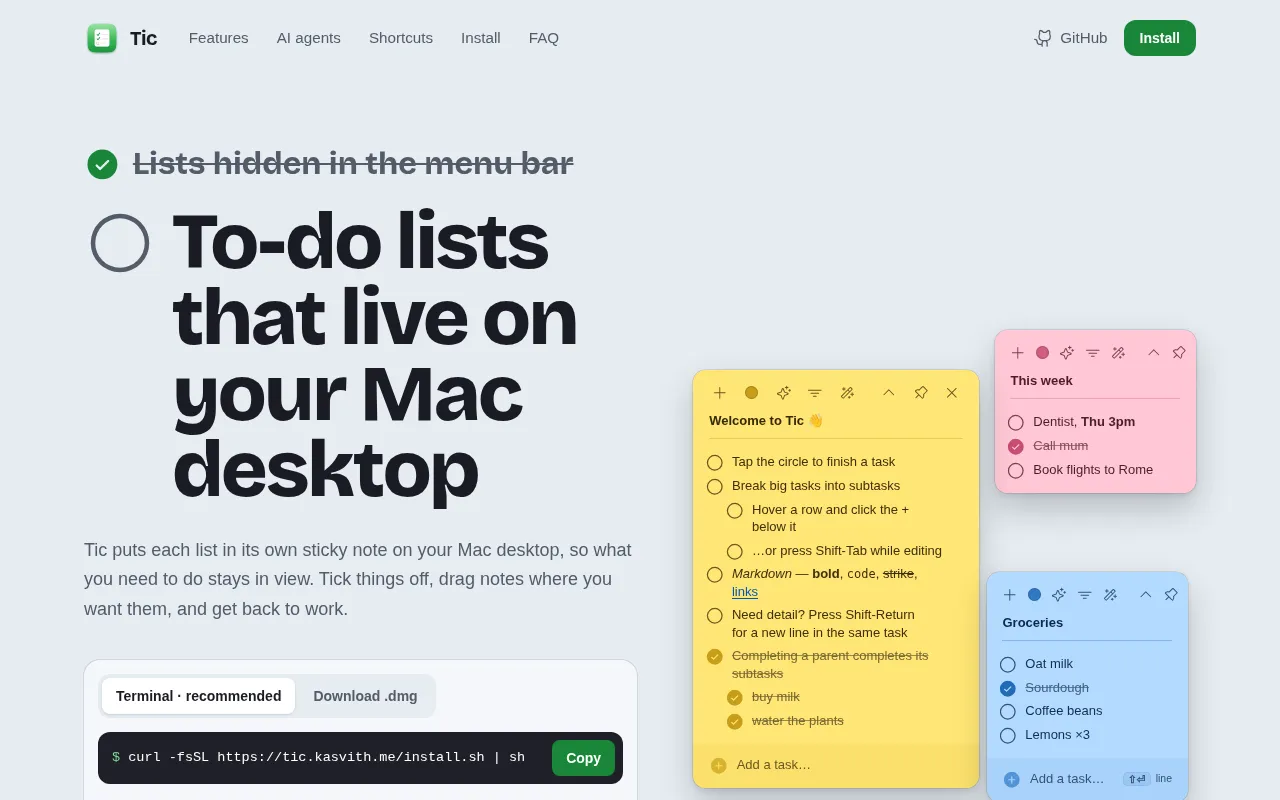
Tic: Free sticky-note to-do lists for your Mac desktop
Sticky notes acquire actual checkboxes in Tic, a free, MIT-licensed Mac app that keeps each to-do list in its own desktop window. Version 0.9.0 requires Apple silicon and macOS 14 or later, with three-level subtasks, Markdown, pasted screenshots and six paper colours or glass. Lists live in a local SQLite database with no account, server or tracking; an optional MCP server lets Claude, Cursor and other AI agents create and complete tasks. It gives the humble desktop reminder modern conveniences without requiring a cloud service to remember the milk.
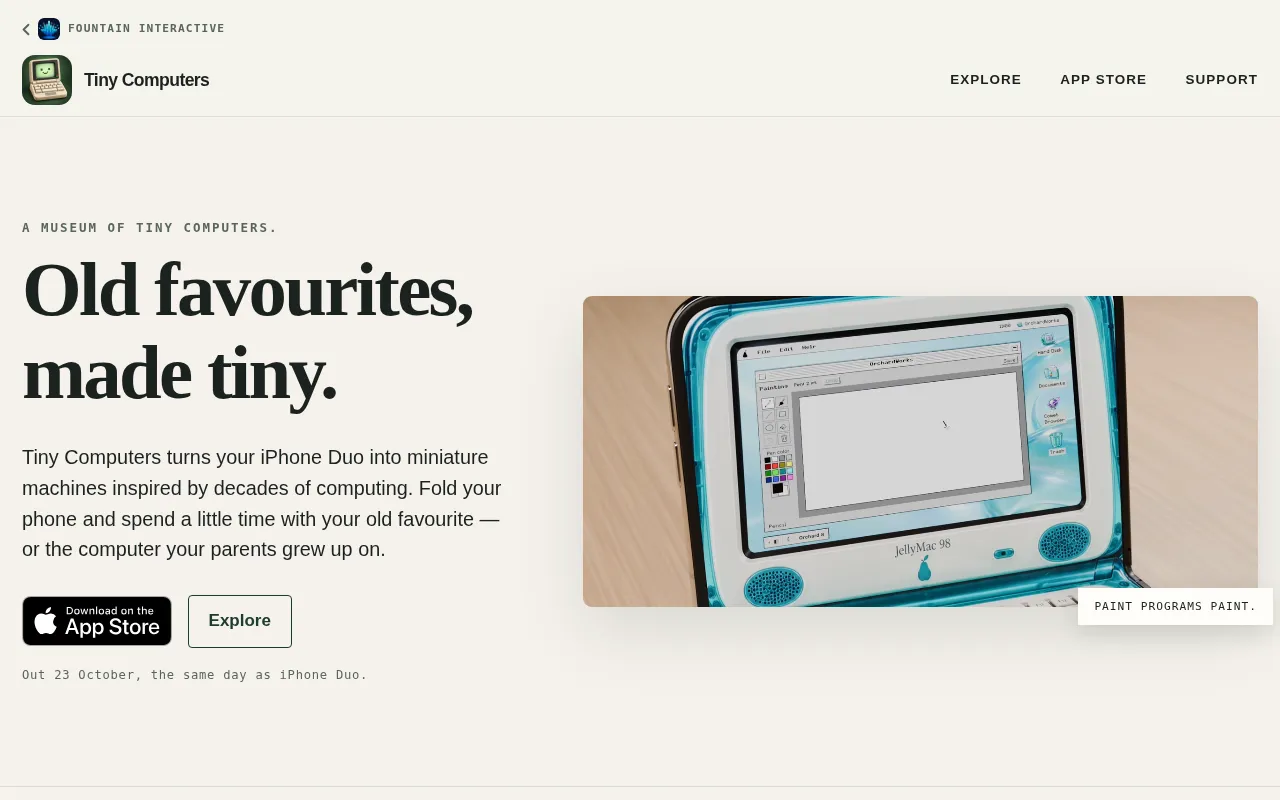
Tiny Computers
Fountain Interactive turns a folded iPhone Duo into a miniature computer museum, complete with clicking keyboards, working command lines and paint programs that actually paint. Tiny Computers includes ten machines and environments, from the Commodore 64, Macintosh and Amiga 500 to the ThinkPad, translucent iMac G3 and Windows XP—which occasionally crashes, naturally. One purchase unlocks the whole collection, with no ads or subscriptions. It makes computing nostalgia tactile, preserving the little rituals and irritations alongside the familiar hardware.
https://www.fountaininteractive.com/TinyComputers/
AI and the Fall? of the Creative Class
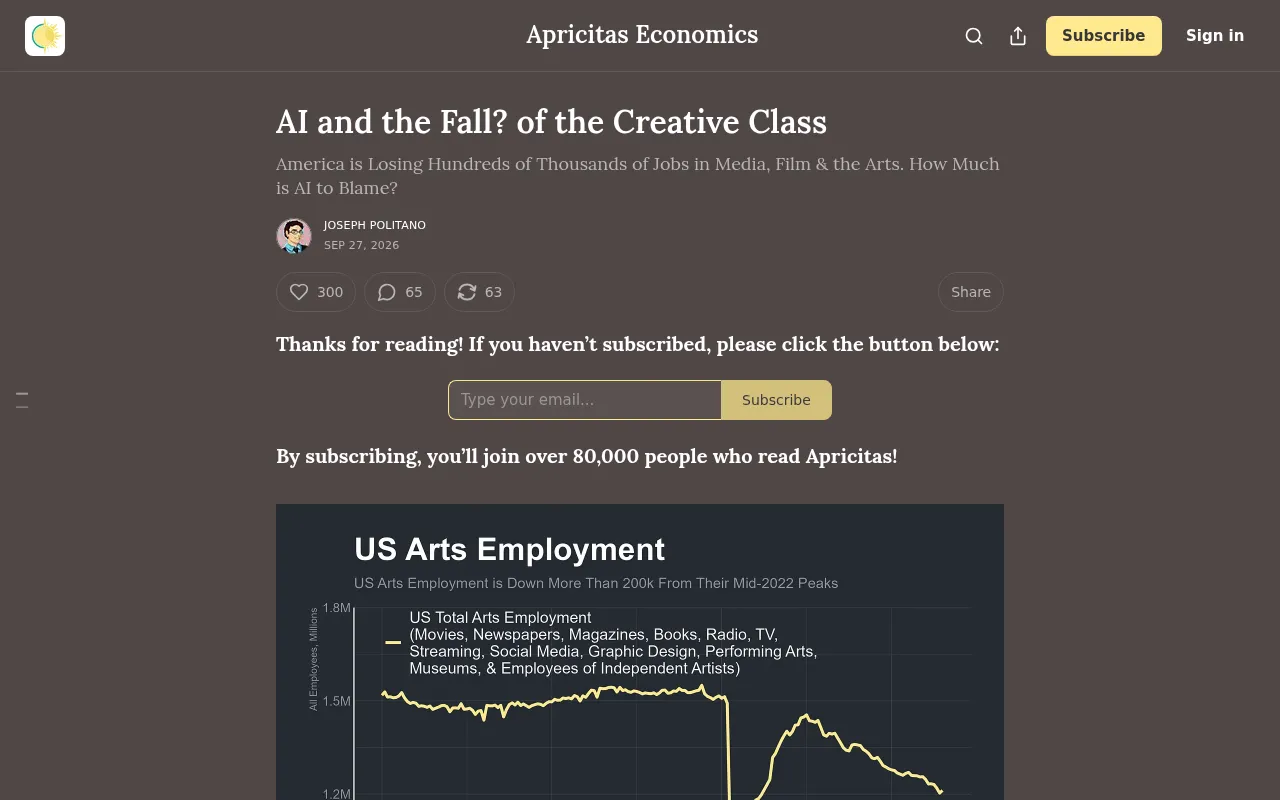
Joseph Politano charts a recession-sized contraction in America’s creative industries: more than 200,000 jobs disappear in four years, including over 100,000 in film and TV—nearly a third of that sector. AI is a plausible accomplice, but Hollywood consolidation, offshoring, and competition from social media make attribution messy; the telling split is shrinking digital arts employment alongside growing in-person entertainment. Metallica’s victory over Napster supplies the cautionary tale: copyright enforcement wins in court while technology dismantles the business model, pushing musicians toward concerts and merch. Hollywood faces a similar squeeze, with box-office revenue 25% below its 2019 peak and streaming unable to fill the gap, but has no equivalent concert tour waiting in the wings.
https://www.apricitas.io/p/ai-and-the-fall-of-the-creative-class
The People Holding Up the Internet: Who Maintains Open Source
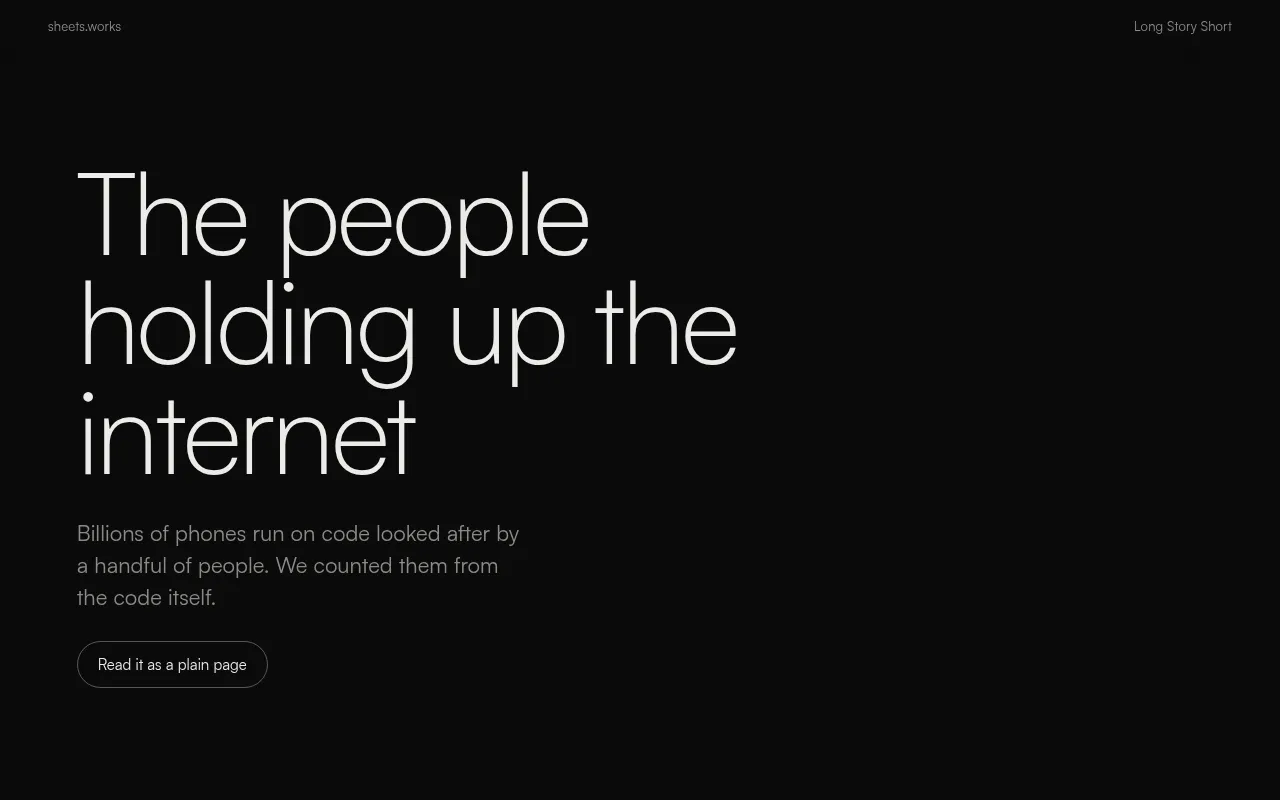
A survey of 23 foundational software projects finds that 11 have just one or two regular contributors, counting people who make at least ten changes in a year. Paul Eggert maintains the time zone database used by four billion phones, Todd Miller accounts for 5,408 of 5,409 sudo changes over a decade, and core-js creator Denis Pushkarev’s donation appeal brings in $57 a month. Commit histories turn those dependencies into visible patterns, including Jia Tan’s takeover of xz before the 2024 backdoor discovery and the gap during Pushkarev’s imprisonment. The familiar xkcd joke about digital infrastructure resting on one unpaid maintainer acquires names, numbers and an uncomfortable amount of supporting evidence.
https://sheets.works/data-viz/holding-up-the-internet
What Is Gridification? The Hidden Shift in Recorded Music
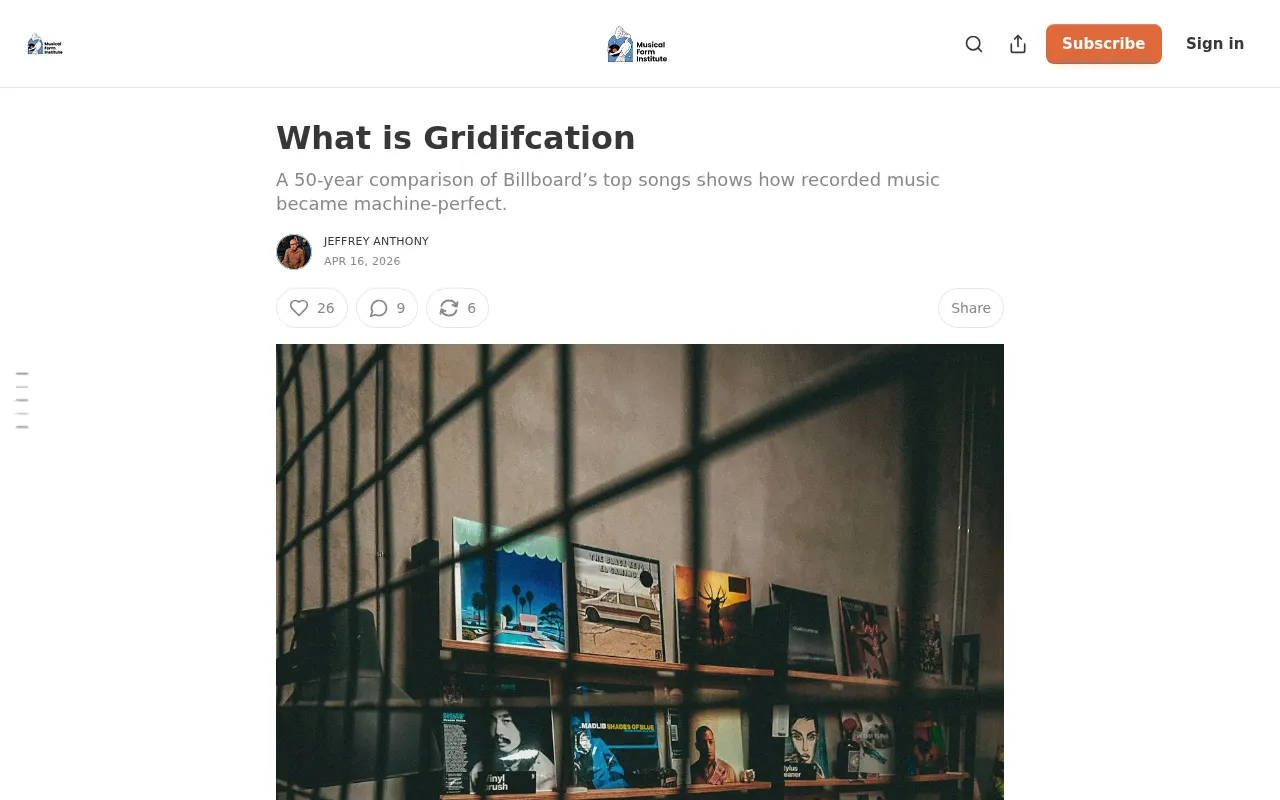
Jeffrey Anthony calls pop’s march toward machine-perfect timing gridification, comparing Billboard’s top five songs from 1975 and 2025. His tempo analysis puts Captain & Tennille’s Love Will Keep Us Together between 124.51 and 137.83 BPM, with Hal Blaine rushing a fill and pulling back, while Lady Gaga and Bruno Mars’s Die with a Smile registers a flat 79 BPM. Shaboozey’s A Bar Song (Tipsy) supplies the revealing exception: its producers build around a guitar-and-vocal voice memo after expensive studio takes fail to capture its feel. Anthony’s argument gives a name to what production software can quietly erase: musicians treating time as something to play with, rather than something to obey.
https://musicalform.substack.com/p/what-is-gridifcation
Nicolas Mattia – Setting up SSH keys on macOS with Touch ID
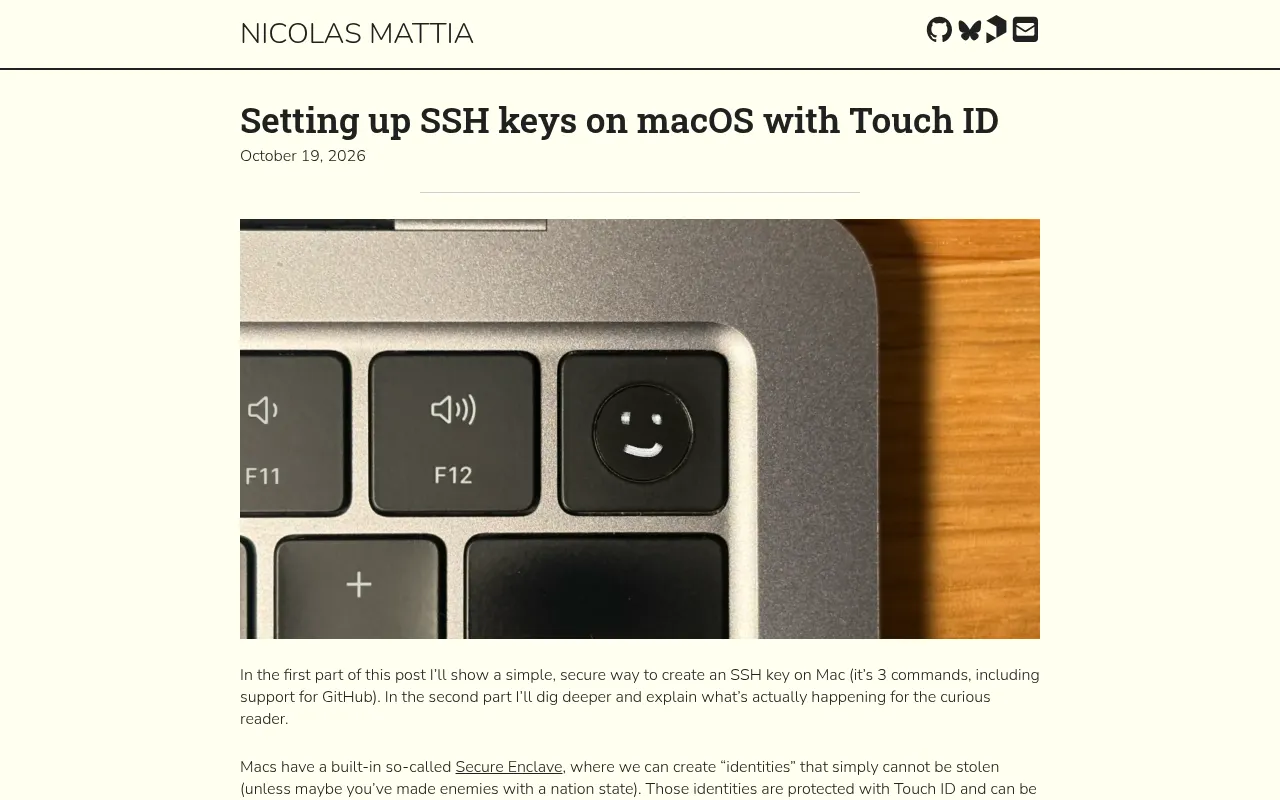
Nicolas Mattia boils Touch ID–protected SSH on macOS down to three commands, using the Mac’s Secure Enclave and built-in tools to support GitHub authentication. The setup creates a non-extractable P-256 identity with sc_auth, connects it to SSH through Apple’s ssh-keychain.dylib, and exposes a public key for registration. A git push then prompts for a fingerprint, though the SSH agent needs a reminder after each reboot, and a dead Mac means replacing and re-registering the key. It turns hardware-backed security into an everyday convenience, with Apple’s vocabulary providing most of the remaining friction.
https://nmattia.com/posts/2026-10-19-setting-up-ssh-keys-touch-id/
Watched

The Changeling (1980) (rewatch)

The 13th Floor (1988) (rewatch)
